
Research Methodology
Framing a Feasible Research Question in a Busy Clinical Setting
Published: 2025-12-20
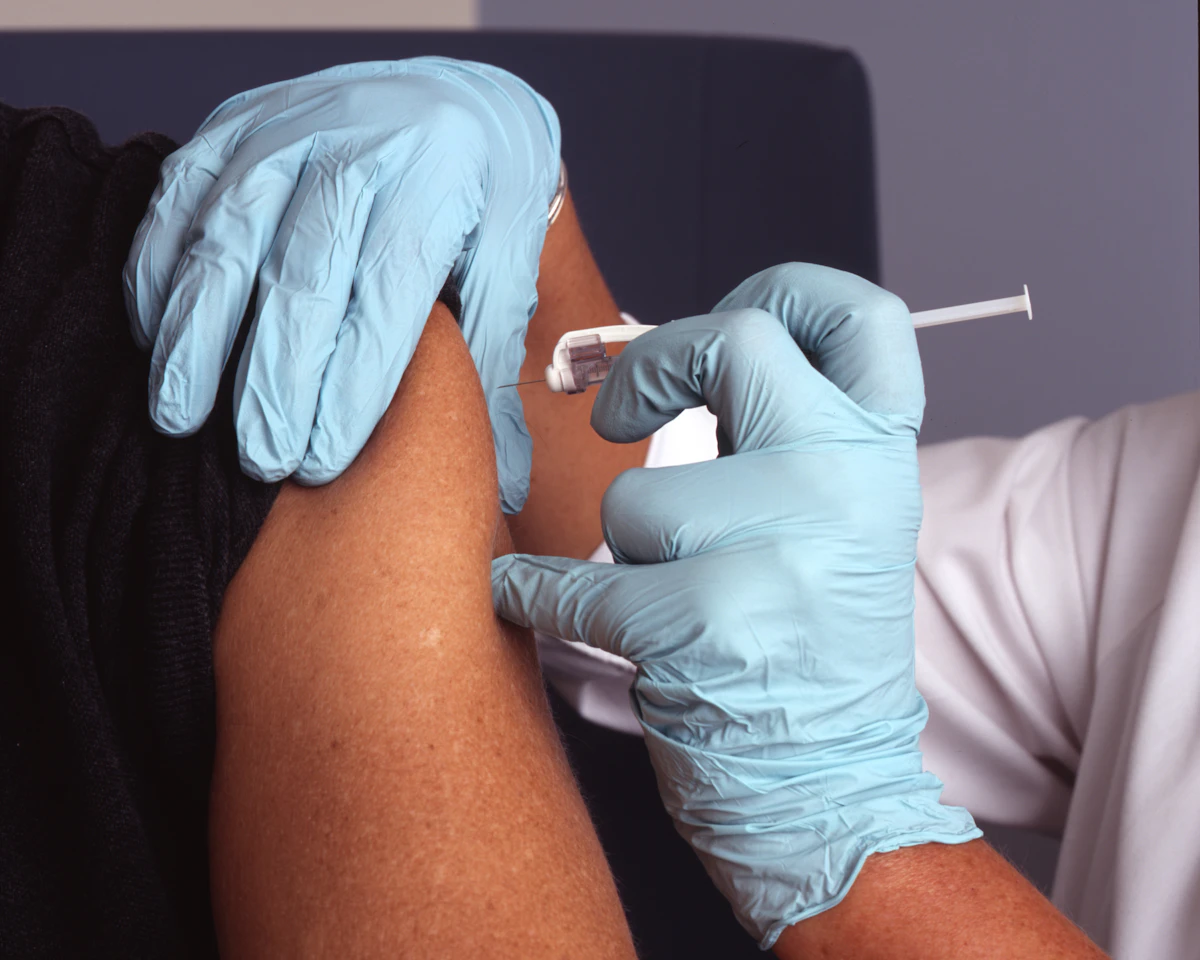
How busy clinicians can turn a ward observation into a feasible, answerable research question, using PICO and the FINER framework.
Framing a Feasible Research Question in a Busy Clinical Setting
Most clinical research ideas die quietly. A physician notices something on rounds — patients on a certain regimen seem to recover faster, or a particular complication keeps showing up in a specific patient group — and the observation gets mentioned at handover, maybe discussed over coffee, and then disappears under the next admission. Not because the idea was bad, but because nobody had the time or the framework to turn "I noticed something" into a question that could actually be answered.
The gap between a clinical hunch and a fundable, publishable research question is where most projects are won or lost — long before any data is collected. This matters more than it might seem: reviewers, ethics committees, and journal editors reject far more proposals for being unanswerable or unfocused than for being badly executed. Getting the question right first is the single highest-leverage step in a busy clinician's research process.
Why Clinical Observations Rarely Become Research Questions
The obstacle usually isn't a shortage of ideas — clinicians generate them constantly. The obstacle is translation. A observation like "antibiotic choice seems to matter for these patients" is not a research question; it's a topic. It has no defined population, no comparison, no measurable outcome, and no boundary on scope. Without that structure, it's impossible to know what data to collect, what the analysis would even look like, or whether the question has already been answered by someone else.
In a busy department, this translation step gets skipped because it feels like paperwork rather than science. In practice, it's the opposite: a well-built question makes everything downstream faster, because it tells you exactly what to search for, what to measure, and when you're done.
Start With Structure: The PICO Framework
The most widely used tool for structuring a clinical question is PICO — Population, Intervention, Comparator, Outcome. Originally developed to help clinicians search for evidence at the point of care, it works equally well in reverse, as a scaffold for building a new research question.
| Element | Question to answer | Example |
|---|---|---|
| P – Population | Who exactly are you studying? | Adults undergoing elective laparoscopic cholecystectomy |
| I – Intervention/Exposure | What are you looking at? | Early postoperative mobilization (within 4 hours) |
| C – Comparator | Compared with what? | Standard mobilization (next morning) |
| O – Outcome | Measured how, and when? | Length of hospital stay, in days |
Adding a T for Time frame (PICOT) is useful when the timing of exposure or follow-up matters clinically. For research questions built around risk factors or diagnostic accuracy rather than interventions, the same logic applies under slightly different labels — Population, Exposure, Comparator, Outcome (PECO), or Population, Index test, Reference standard, Outcome for diagnostic studies. The letters change; the discipline of specifying each element explicitly does not.
Once each PICO element is filled in, the vague topic above becomes something answerable: "Among adults undergoing elective laparoscopic cholecystectomy, does mobilization within 4 hours of surgery, compared with mobilization the following morning, reduce length of hospital stay?" That sentence tells you exactly which patients to include, what to compare, and what to measure — which is also exactly what a search strategy, an ethics application, and a statistician will need later.
Test It Against FINER Before You Commit
A structured question can still be a bad research project. The FINER criteria, described by Hulley and colleagues in Designing Clinical Research, give a fast way to pressure-test a question before investing real time in it. FINER stands for Feasible, Interesting, Novel, Ethical, and Relevant.
| Criterion | What it really asks |
|---|---|
| Feasible | Enough patients, time, money, and technical expertise to actually finish it |
| Interesting | Would the answer intrigue you, your peers, and the wider field enough to sustain the work? |
| Novel | Does it confirm, refute, or extend something — rather than simply repeat it? |
| Ethical | Would an institutional review board or ethics committee realistically approve it? |
| Relevant | Does it matter to clinical practice, health policy, or the next study someone else will do? |
For a clinician trying to fit research around clinical duties, Feasibility deserves the most scrutiny, because it's the criterion most often overestimated. Feasibility isn't just "is this interesting enough to study" — it's concrete: Is there a realistic, achievable sample size at your site within a reasonable time window? Is the outcome already captured in records you can access, or will you need to collect it prospectively? Do you have, or can you get, statistical support? Is the scope narrow enough to complete around a clinical schedule rather than needing protected research time you don't have?
A question that would need 400 patients with a rare diagnosis, recruited prospectively over three years, is not more rigorous than a smaller, retrospective question — it's simply not feasible for most residents or busy attendings, and an unfinished study helps no one.
A Worked Example: From Observation to Answerable Question
The observation: "It seems like our post-operative wound infection rate is higher in patients who get a particular dressing type."
Step 1 — Narrow the population. Which surgery? Which unit? Over what period? → Adult patients undergoing clean abdominal surgery at your hospital over the past two years.
Step 2 — Define the exposure precisely. Which dressing, compared with which alternative, and how is "type" actually recorded in the notes? → Standard gauze dressing versus film dressing, as documented in the operative record.
Step 3 — Define the outcome operationally. "Infection" needs a case definition you can apply consistently — for example, CDC/NHSN surgical site infection criteria, so two reviewers extracting data would agree on which charts count.
Step 4 — Assemble the question. "Among adults undergoing clean abdominal surgery at [hospital] between 2024 and 2026, is film dressing associated with a different rate of surgical site infection, using standardized SSI criteria, compared with standard gauze dressing?"
Step 5 — Run it through FINER. Feasible (retrospective chart review, existing data, achievable sample from two years of records) — yes. Interesting to surgical colleagues — likely. Novel — check the literature first; this exact comparison may already be well studied, in which case a local replication with a specific angle (a particular surgery type, a specific patient subgroup) may be more defensible. Ethical — retrospective, minimal risk, straightforward IRB pathway. Relevant — directly informs a purchasing and practice decision.
Only after this exercise is the question ready for a literature search, a protocol, and — if it turns into a systematic look at existing evidence rather than new data collection — a formal screening process.
Common Pitfalls That Sink Research Questions in Practice
- Bundling two or three questions into one. "Does X reduce infection and improve satisfaction and lower cost?" needs three separate analyses, sometimes three separate designs. Pick the primary question and treat the rest as secondary, clearly labeled as such.
- Skipping the literature check. A question that feels novel in your department may already have a definitive answer in the published literature. A 30-minute search before finalizing the question can save months.
- An outcome that isn't actually measurable from your data source. "Improved quality of life" sounds meaningful but needs a validated instrument; if you didn't administer one, you can't measure it retrospectively.
- Underestimating ethics and administrative timelines. Even minimal-risk retrospective studies need review. Build this into your timeline from day one, not after the data is already collected.
- Working in isolation. A ten-minute conversation with a biostatistician or a research-active mentor before finalizing the question routinely catches feasibility problems that would otherwise surface only after months of work.
A Quick Feasibility Checklist for the Busy Clinician
- Can you state the question in one sentence with a clear population, comparison, and outcome?
- Is the outcome something you can measure with data you already have, or can realistically collect?
- Could you reach an adequate sample size within your actual patient volume and timeline?
- Have you checked whether this question — or something close to it — has already been answered?
- Do you have, or can you get, statistical input before you start rather than after?
- Would your institution's ethics committee have an obvious, fast pathway for this design?
If you can answer "yes" to all six, the question is very likely ready to become a protocol.
Where This Leads Next
A well-built question is the foundation for everything that follows — whether that means designing a new study or, just as often, searching the existing literature to see what's already known through a systematic review. If the next step for your question is synthesizing existing evidence rather than collecting new data, the same discipline you used here carries directly into building a transparent, defensible screening process.
Frequently Asked Questions
What makes a clinical research question "feasible"?
Feasibility means the study can realistically be completed with the time, patient volume, funding, and technical support actually available to you — not in principle, but at your specific site and stage of training. It is one of the five FINER criteria and is usually the one most overestimated by early-career researchers.
What is the difference between PICO and PICOT?
PICO structures a question around Population, Intervention, Comparator, and Outcome. PICOT adds a Time element, which is useful when the timing of exposure, follow-up, or outcome measurement is clinically important — for example, comparing outcomes at 30 days versus 12 months.
How do I know if my research question is novel?
Search the literature specifically for your exact population, comparison, and outcome combination before finalizing the question. A topic can be well studied in general while your specific angle — a particular subgroup, setting, or comparison — remains unanswered.
Can my research question change after I start the study?
Minor refinements are normal as you pilot data collection, but substantial changes to the population, primary outcome, or comparison after seeing results should be reported transparently, not presented as if they were planned from the outset. This is why registering a protocol before starting, when applicable, is good practice.
How long should it realistically take to develop a research question?
For a feasible, well-scoped clinical question, expect one to three focused sessions: an initial framing using PICO, a literature check, a FINER review, and ideally one conversation with a mentor or statistician. Rushing this stage tends to cost far more time later.
Do I need a research mentor to develop a good question?
It isn't strictly required, but a short conversation with someone experienced in research design very often catches feasibility or novelty problems that are hard to see on your own — particularly around realistic sample size and data availability.
References
- Hulley SB, Cummings SR, Browner WS, Grady DG, Newman TB. Designing Clinical Research. Lippincott Williams & Wilkins.
- Higgins JPT, Thomas J, Chandler J, et al. (editors). Cochrane Handbook for Systematic Reviews of Interventions, Chapter 2: Determining the scope of the review and the questions it will address. Cochrane.
- Richardson WS, Wilson MC, Nishikawa J, Hayward RSA. The well-built clinical question: a key to evidence-based decisions. ACP Journal Club.
- International Committee of Medical Journal Editors (ICMJE). Recommendations for the Conduct, Reporting, Editing, and Publication of Scholarly Work in Medical Journals.
Found this insightful? Share it with colleagues in healthcare and research.
Ready to Start Your Research or Join a Publication?
Secure your place in our guided co-authorship and methodology mentorship programs directly via WhatsApp with our research faculty.